
 Spanish
 English
 Deutsch
 한국어
한국어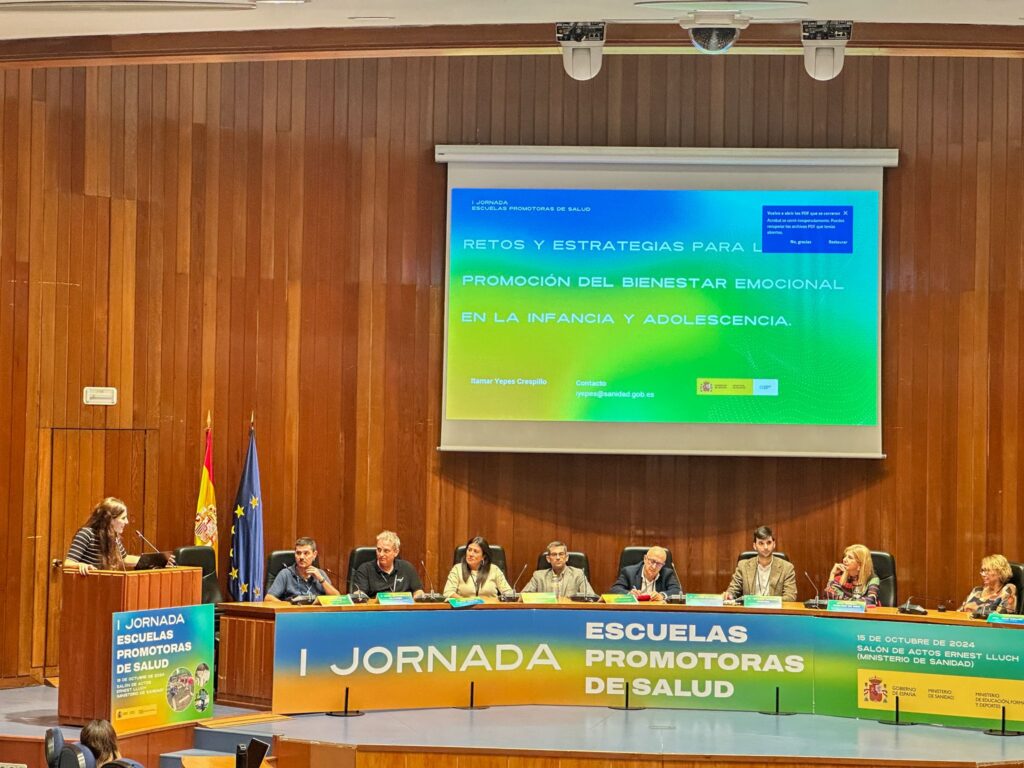
Last Updated on 18 de July de 2026 by S22 Digital
The first Health Promoting Schools Conference was inaugurated with the participation of Mónica Domínguez García, Director General of Evaluation and Territorial Cooperation, and Pedro Gullón Tosio, Director General of Public Health and Health Equity. The event began with the presentation of the conceptual framework for Health Promoting Schools, a comprehensive model for promoting health, well-being, and sustainability in the educational sphere.
During the conference, experts such as Javier Gállego, a member of the WHO and UNESCO External Advisory Group, addressed the model of Health Promoting SchoolsThe event included presentations on implementation guides and guidelines. Experiences from various networks and schools, such as the CEIP María Moliner in Zaragoza and the IES Ría San Martín in Cantabria, were also shared, highlighting the benefits of this approach in their communities.
A panel discussion showcased the efforts of different regions in Spain to implement this model, emphasizing the key role of the educational community’s participation. In the afternoon, tools and strategies for promoting health in schools were discussed, addressing topics such as e-cigarettes and children’s mobility.
The day concluded with a summary of the main findings, underscoring the importance of continuing to promote health in school environments, ensuring a participatory and inclusive approach.
About Schools of Health
Health Promoting Schools is an initiative that seeks to integrate health promotion into the educational sphere, recognizing the school as a key space for fostering the physical, emotional, and social well-being of students. This model, promoted by international organizations such as the WHO and UNESCO, proposes a holistic vision where health becomes an essential part of the educational process.
The main objective of Health Promoting Schools is to create school environments that not only focus on academic instruction but also promote healthy lifestyles, encourage physical activity, offer education on balanced nutrition, and strengthen the mental and emotional health of students. Furthermore, the model encourages the active participation of the entire educational community, including students, teachers, parents, and administrative staff, to guarantee an inclusive and sustainable environment.
In Spain, the Health Promoting Schools project has made considerable progress. Regional networks, such as the Aragonese Network of Health-Promoting Schools, implement specific health promotion programs in collaboration with schools, adapting initiatives to local needs. Furthermore, the Ministry of Health and the Ministry of Education, Vocational Training and Sport have collaborated on the development of guidelines and tools to facilitate the implementation of the model throughout the country.
Health-Promoting Schools also address contemporary challenges, such as the impact of e-cigarettes, safe mobility in school environments, and environmental sustainability. These aspects are aligned with the Sustainable Development Goals, underscoring the importance of an education that also fosters citizens committed to their own well-being and that of their community.
Ultimately, the Health-Promoting Schools model contributes to building a healthier, more equitable, and sustainable school environment, where the holistic well-being of children and young people is prioritized as a fundamental component of their development and learning.