
 Spanish
 English
 Deutsch
 한국어
한국어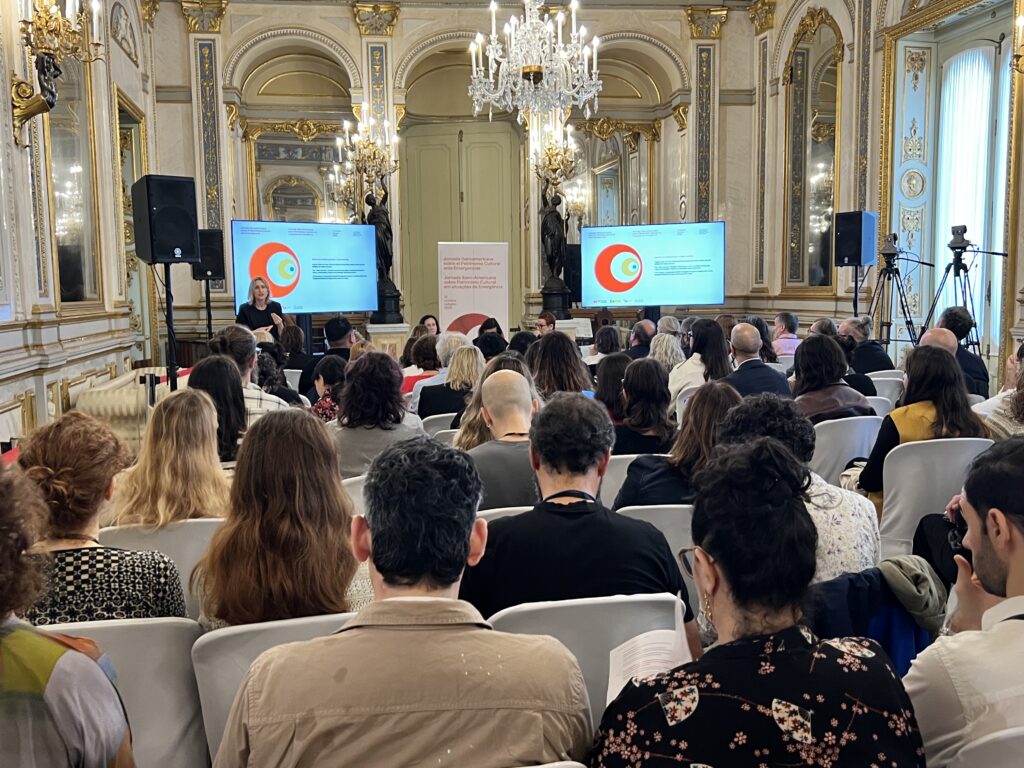
Last Updated on 17 de July de 2026 by S22 Digital
Within the framework of the 21st Meeting of the Intergovernmental Council of the Ibermuseos Programme, the Directorate-General for Cultural Heritage and Fine Arts, through the Subdirectorate-General for State Museums, promoted a conference that became an essential meeting point for museum professionals, collection managers and cultural managers from across Ibero-America.
The Ibero-American Conference on Cultural Heritage in the Face of Emergencies brought together in Valencia specialists from Spain, Portugal and Latin America with a common goal: to strengthen the heritage sector’s response capacity in emergency situations and to build shared strategies to protect common heritage against the effects of climate change and natural disasters.
The debate did not arise in a vacuum. The DANA storm that struck the Valencian Community in October 2024 was the trigger for deep reflection on the vulnerability of cultural heritage to extreme weather events.
The damage suffered by churches, archives, museum collections and intangible assets prompted one of the largest heritage-recovery operations in Spain’s recent history, coordinated between the Ministry of Culture and the Generalitat Valenciana.
That experience, together with those undergone in other Ibero-American countries facing hurricanes, volcanic eruptions or fires, served as a starting point for rethinking action protocols, prevention systems and international cooperation.
The conference opened with the presentation of the National Plan for Risk and Emergency Management in Cultural Heritage, by Cristina Villar Fernández and Arsenio Sánchez Hernampérez, of the Instituto del Patrimonio Cultural de Spain (IPCE). The panel also featured Pablo Muñoz del Olmo, president of the Fundación Fuego, together with representatives of three museums particularly affected by the DANA:
-
Alejandro Villar Torres, director of the Museu de la Festa in Algemesí.
-
Eva Sanz Gibert, head of the Museu de la Rajoleria in Paiporta.
-
Francesc Martínez Sanchis, director of the Museu del Palmito in Aldaia.
They all agreed on the importance of training, inter-institutional coordination and preventive planning to mitigate future damage.
Ibero-American Perspective: Shared Experiences
The second part of the meeting gave a voice to representatives of museums and institutions from Brazil, Chile, Cuba, Colombia and Portugal, members of the Ibermuseos Programme, who shared their own risk-management strategies:
-
Michel Rocha Correia (IBRAM, Brazil) presented the comprehensive approach of the Brazilian Institute of Museums’ emergency plan.
-
Alan Trampe (Chile) presented the risk-management model applied by the National Subdirectorate of Museums.
-
Sonia Virgen (Cuba) addressed the Cuban experience in hurricane risk management, with a long track record in preventive heritage protection.
-
Fátima Roque, president of the Intergovernmental Council of the Ibermuseos Programme and coordinator of the Rede Portuguesa de Museus, highlighted the training and collaborative tools developed by Portugal.
-
Luis Carlos Manjarrés (Colombia) detailed the work of the National Museum of Colombia in volcanic emergency management, a frequent risk in its territory.
Their contributions underlined a common message: Ibero-American cooperation is the key to strengthening prevention and response systems for cultural emergencies.
The conference was brought to a close by Mônica Barcelos and Vanessa de Britto Maluf, of the Technical Unit of the Ibermuseos Programme, who presented a new diagnostic resource on threats to museums and announced the launch of the new edition of the Ibermuseos Fund for Museological Heritage.
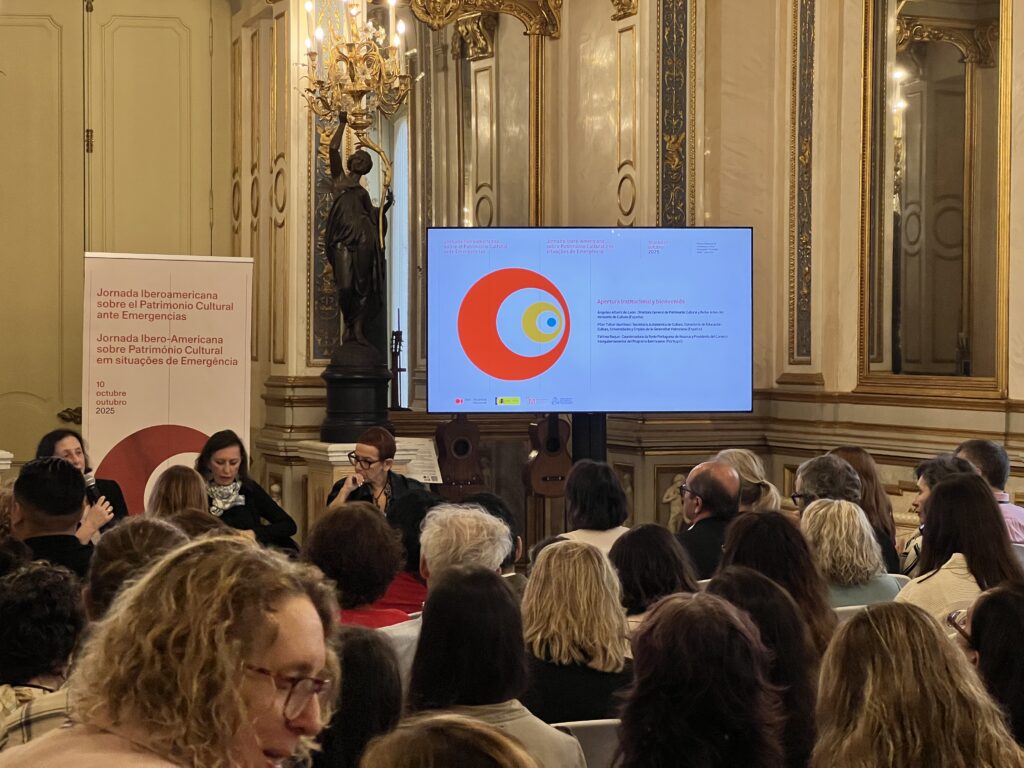
This instrument seeks to support projects geared towards heritage resilience, risk-management training and innovation in preventive conservation.
With more than five hours of exchange, the Ibero-American Conference on Cultural Heritage in the Face of Emergencies made it clear that museums are living and vulnerable spaces, but also resilient ones.
Spain, as a founding member of the Ibermuseos Programme, reaffirmed its commitment to Ibero-American cultural cooperation and the protection of shared heritage, in a global context where natural disasters and climate change demand ever more coordinated responses.
The event concluded with a unanimous message: “Heritage is memory, identity and future; protecting it against emergencies is protecting ourselves.”