 Spanish
 English
 Français
 Deutsch
 한국어
한국어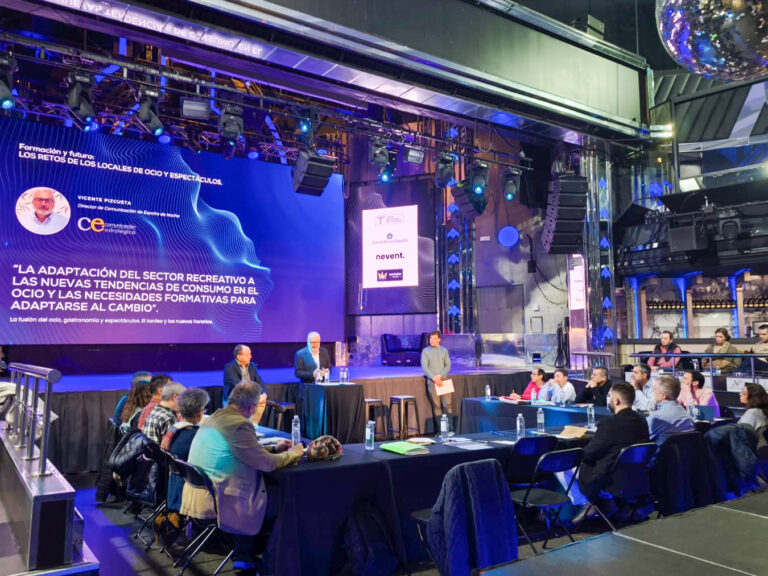
Last Updated on 18 de July de 2026 by S22 Digital
Leisure and Entertainment Sector
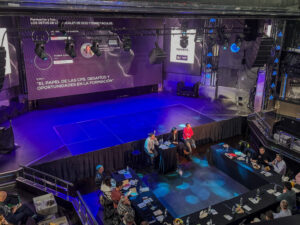
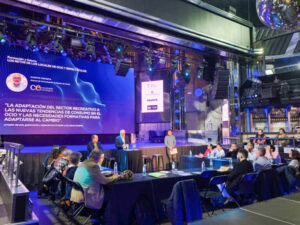
The leisure and entertainment sector is experiencing a key moment of transformation. This was made clear at the conference organised by FUNDAE, where experts, business owners and professionals discussed the future of this industry in a context of digitalisation and regulatory change. The event, which enjoyed strong participation, made it possible to analyse in depth the main challenges and opportunities the sector faces. One of the central topics of the debate was training. The urgent need for training to reach companies effectively and, above all, workers was highlighted. Training is not only a fundamental pillar for the sector’s competitiveness, but also an essential tool for adapting to new technologies and market demands. However, a recurring problem was pointed out: despite a wide training offer, the companies responsible for delivering it often do not carry it out properly, which makes it essential to guarantee access to quality training programmes and to accredit the acquired skills appropriately. The certification of knowledge and skills becomes an indispensable tool for professionalising the sector and ensuring its sustained growth. Likewise, the conference underlined the importance of new technologies in the leisure and entertainment industry. From the digitalisation of processes to the incorporation of innovative tools for event management and the user experience, the sector must commit to constant evolution to remain competitive. Training in these new technologies is key for the sector’s professionals to adapt and seize the opportunities offered by digital transformation. Among the conference’s featured speakers were key figures from the sector such as Ramón Mas, president of España de Noche, who welcomed the event, Ismael Fernández, Communication and IR Manager at Comunicación Estratégica, and Neus Cerdà, of Club Malasaña. In the second round table, entitled “Technology Applied to Entertainment”, moderated by Vicente Pizcueta, Miguel Ángel Larriba Concha, Sound Areas Coordinator at the Centre for Entertainment Technology (C.T.E.), and Brais Padín, founding partner and commercial director of Nevent, took part, addressing the role of technology in creating new recreational experiences and improving the economic performance of leisure venues. Finally, in the third round table “The role of the CPS, challenges and opportunities in training”, Javier Agudo García (CCOO), Rubén García (UGT) and Denia Castaño, president of the CPS, took part, discussing the importance of union-related training and its impact on improving the sector’s conditions. In short, the event organised by FUNDAE made it clear that the future of leisure and entertainment depends on quality training that truly reaches workers. Only through this approach will the sector be able to successfully face the challenges of the present and the future, ensuring its sustainability and evolution in an increasingly digitalised and demanding world.