
 Spanish
 English
 Deutsch
 한국어
한국어Last Updated on 17 de July de 2026 by S22 Digital
A meeting point to address the training challenges of the industrial refrigeration sector
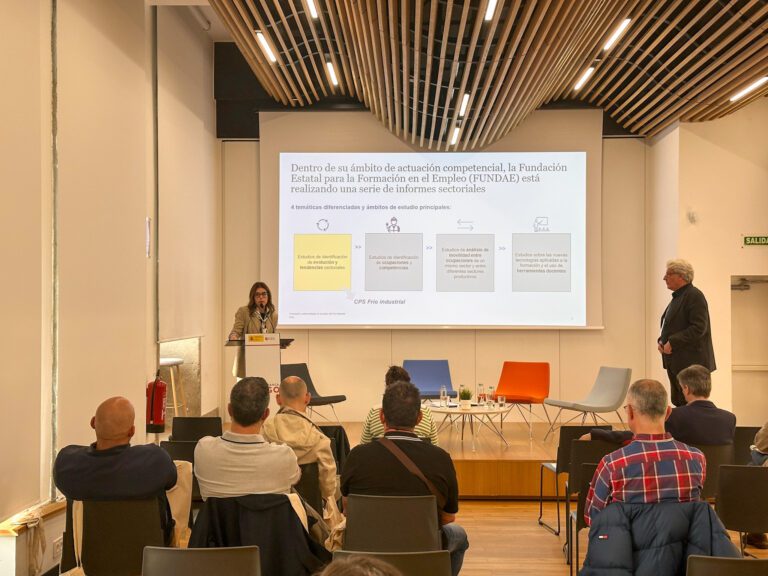
The Auditorium of the Zona Franca de Vigo was, on 9 April, the setting for a benchmark conference for the industrial refrigeration sector, organised by the Sectoral Joint Committee (CPS) for Industrial Refrigeration. The event brought together company representatives, trade unions, innovation experts and sector professionals, with the aim of discussing the present and future challenges of training and professional development in this strategic industry. The welcome was given by Jesús Monroy, partner at Monroy & Asociados Comunicación, who highlighted the fundamental purpose of the day: to connect training needs with the labour market and the sector’s growth strategy. Next, Marcos Badenes, president of the CPS for Industrial Refrigeration, gave an address underlining the Committee’s work as a coordinating body between companies, workers and administrations. The screening of the CPS’s institutional video helped make this unifying role in the industrial refrigeration ecosystem visible. The first round table focused on the challenges and opportunities of training in industrial refrigeration from the direct experience of companies. Moderated by Jesús Monroy, it featured contributions from:
- Darío Iglesias Vázquez (Frigoríficos de Vigo)
- Iago Rada Soto (Frialia Logística)
- Ana Garrido Ruso (Congalsa)
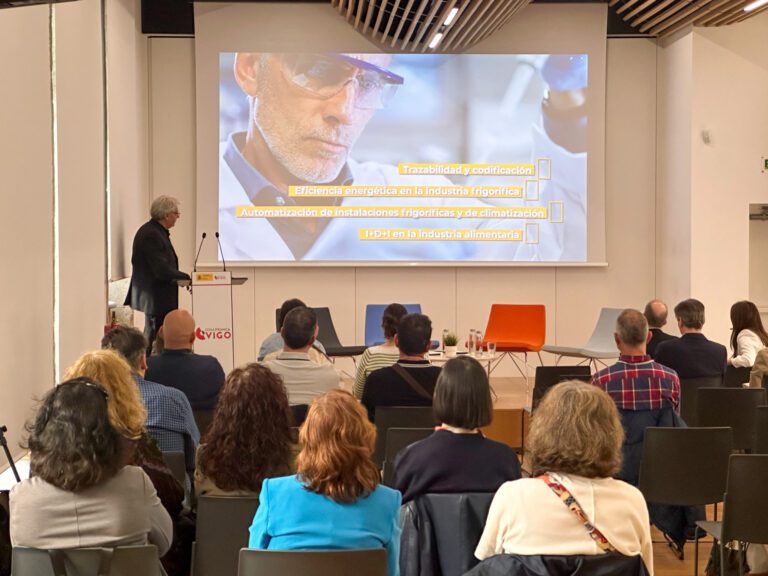
They all agreed on the importance of building a training offer tailored to the real needs of the sector. The diversity of needs according to company size was discussed, and the need to strengthen collaboration between employers and trade unions for a constant updating of training programmes was emphasised. One of the highlights of the day was the intervention of Andrea Sousa, representative of PwC, who presented a technical study on the innovation opportunities in the cold chain that will shape the sector’s immediate future:
- Process digitalisation.
- Energy transition and sustainability.
- Automation and efficiency in cold chain management.
Sousa underlined the need for vocational training to incorporate these skills in order to ensure the sector’s competitiveness. The second round table addressed the role of governance in training, with the participation of:
- Luis A. Rodríguez (CCOO Industria)
- Nuria Pérez (UGT FICA)
- Marcos Badenes (CPS)
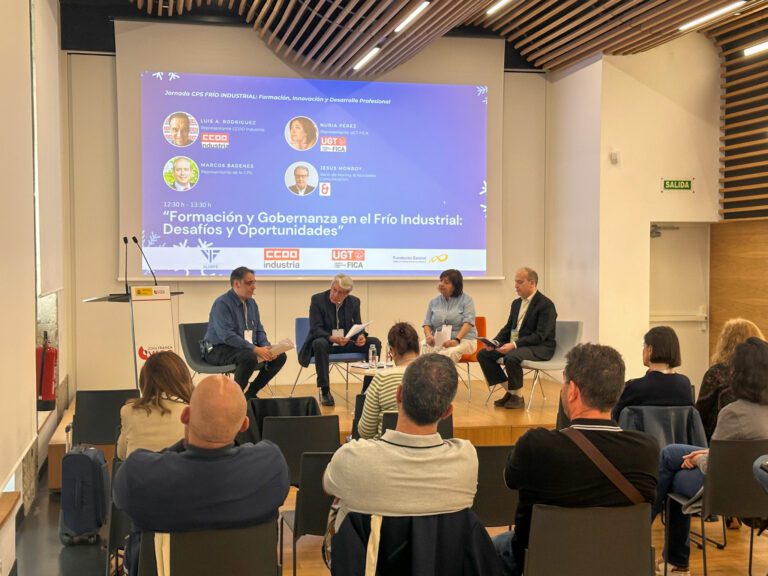
Also moderated by Jesús Monroy, this table focused on the need to build a more inclusive, flexible training model adapted to technological and productive evolution. Current limitations were discussed, as well as the importance of the CPS continuing to play a key role in the continuous improvement of the training offer and in the creation of training pathways geared towards employability. The president of the CPS, Marcos Badenes, closed the day, summarising the main conclusions:
- Strengthen collaboration between all the sector’s stakeholders.
- Design a training offer that responds to the challenges of digitalisation and sustainability.
- Enhance the CPS’s capacity as a space for dialogue and strategic planning for talent development in the industrial refrigeration sector.